


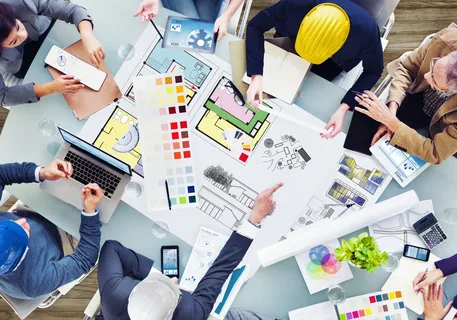
Examining the year 2025 from the most frequented articles in our Materials area, it is obvious that concerns about interiors have firmly spoken to our visitors. Although people are spending more time inside both physically and now even virtually in the metaverse, the shapes and functions that characterize these interior places have become more important and valuable. Driven mostly by the effects of the many lockdowns still fresh in our mind, we have been seeing a trend in experimenting with fluid, flexible and adaptable settings for some years now.
The confusion and uncertainty we went through helped us to appreciate the need of buildings with spatial awareness and sensitivity—those who could foresee and accept responsibility for the consequences they cause on their occupants. Essential are things like orientation, room size and distribution, natural light and ventilation utilization, and general space aesthetics. Technological developments have taken center stage and upset conventional interior design with the best interior design colleges in Jaipur, hence inspiring creative and fresh ideas for circularity and household efficiency.
Revealing the Future of Interior Design with Artificial Intelligence and Technology
We have always been passionate about sustainability. Our cities are expanding and confronting environmental issues, so it is becoming more and more obvious that the areas we create have to not only look well but also benefit the earth. We think that by 2025, every design choice will be driven by sustainability’s leading position. The emphasis will be on building environments that reduce our effect on the earth from employing locally produced, eco-friendly materials to adopting energy-efficient technology. Sustainable interiors will be a duty we all share, not just a luxury.
Leading the tech-driven transformation in interior design is the immersive experience made possible by VR and AR. Designers can now provide customers virtual walkthroughs of places, so enabling them to see every aspect before a single component is put into use. VR and AR not only improve the design process but also democratize it, hence giving consumers a degree of involvement and knowledge that was once unthinkable.
Design Help Driven by AI
In the design process, artificial intelligence has grown to be a useful friend. AI algorithms provide designers insights and recommendations by means of large databases of spatial configurations, client preferences, and design trends. This not only simplifies the decision-making process but also helps to produce designs more likely to appeal to the end-users. A new era of efficiency and invention is being ushered in by the combination of human ingenuity with machine intelligence.
Integration of IoT and Smart Homes
Smart houses have evolved from simple convenience to a major component of current interior design. Designers are challenged to build places that not only fit but also improve these technological wonders as gadgets and systems are integrated via the Internet of Things (IoT). Interior design is being complexly woven into the fabric of technology, from smart lighting and thermostats to AI-driven home automation, producing houses that are not only visually appealing but also intuitively practical.
The era of personalization is here, and technology is essential in providing unique design solutions. AI algorithms provide tailored suggestions by means of user preferences, lifestyle habits, and design trends. This degree of personalization goes beyond furniture selections to include spatial layouts, color palettes, and even creative aspects. The outcome is a design that seems especially suited to the person, so reflecting their preferences and improving their general experience of the area.
3D Printing Transforming Furniture Design
In the field of furniture design, 3D printing has become a game-changer. Designers may now play with complex and unusual forms, producing furniture items that were formerly unreachable using normal production techniques. 3D printing not only increases the range of design options but also provides a more sustainable solution by allowing exact material consumption, hence reducing waste.
Difficulties and Ethical Issues
Although technology creates opportunities for invention, it also raises questions of ethics and difficulties. Designers have to struggle with issues like data privacy, the environmental effect of technology manufacturing, and the possible loss of conventional handicraft. As the sector races into the future, finding a balance between technical innovation and ethical design approaches becomes more important.
Eco-Friendly Materials and Sustainability
Growing environmental consciousness drives more need for sustainable design techniques. Future interior design will keep stressing the use of low-VOC paints, bamboo, repurposed wood, and other environmentally friendly materials. Designers are also including energy-efficient appliances and live green walls to help to lower environmental impact. The emphasis is on designing ecologically conscious as well as lovely settings.
Versatility and flexibility, too, will shape interior design going forward. Urban space being limited drives the demand for adaptable, multifunctional interiors. Key is furniture that can be readily moved or changed, including folding workstations or modular couches that can be rearranged according on the user’s need. Reflecting the growing trend of remote work, designers are also concentrating on building rooms that may easily flow from home offices to living spaces.
Cultural and Personal Tailoring
Interior design is increasingly being influenced by personalization. Clients want areas that mirror their particular preferences, cultural heritage, and way of life. Customised interiors that convey a personal narrative or include legacy components are growingly popular as they provide a stronger feeling of connection and identity within the space.
Maximalism and Minimalism
Both designs provide different approaches to build strong and useful spaces; the decision between the two usually relies on personal taste and manner of living.
Conclusion
Advancements in technology and the incorporation of artificial intelligence are inextricably linked to the future of interior design. These technological wonders are not just tools for designers but also catalysts for a paradigm change in the way we think about and experience the places we occupy, from transforming the design process to building environments that react intelligently to the needs of people. The combination of human creativity with the force of technology offers a future in which the limits of design are always pushed as we negotiate this dynamic environment, hence revealing new opportunities and influencing our interaction with our surroundings as well as our job and living. For more details choose the best interior design colleges in Jaipur.